

Sell Your Care Home. Maximize the Business and the Real Estate.
You own two assets: a profitable healthcare business and a valuable property. We structure exits that maximize the value of both, targeting buyers looking for "Turnkey" Residential Assisted Living (RAL) opportunities.
Specializing in 6-Bed Care Homes, RCFEs, Adult Foster Homes, and Boutique Assisted Living.
Sell Your Care Home. Maximize the Business and the Real Estate.
A luxury private-pay home trades differently than a state-funded facility. We categorize your property to match the investment criteria of our specific RAL buyers.

The Luxury Private Pay Home
Focus: High-end amenities, private rooms, $6k-$12k/month resident fees.
Value Driver: Net Operating Income (NOI). Buyers treat these like "Boutique Hospitality" assets. We market the lifestyle, the margins, and the low acuity of the residents to drive a premium multiple.

The Medicaid / State-Funded Home
Focus: Shared rooms, government waivers, high occupancy.
Value Driver: Guaranteed Occupancy. While margins are tighter, the revenue is recession-proof. We position these as "Government-Backed Yield" plays for risk-averse investors who want consistent checks.

The "Cluster" Portfolio
Focus: Owners with 3+ homes in a tight geographic radius.
Value Driver: Management Efficiency. Selling a single home is a job; selling a cluster is selling a business. We pitch these to Private Equity and Regional Operators who pay a premium for immediate scale and shared staffing pools.
The "Deal Killers": We Fix Them Before We List
RAL deals are complex because they involve both Healthcare Regulations and Real Estate Code. We address these friction points proactively.
The OpCo vs. PropCo Separation
The Problem: Many owners lump their real estate equity and business profit into one number, confusing the bank and the buyer.
The Solution: We split the valuation into two distinct parts: The Operating Company (OpCo) valued on EBITDA, and the Property Company (PropCo) valued on commercial appraisal. This clarity helps buyers secure SBA financing faster.
The "Grandfathered" License Trap
The Problem: In some states, older licenses with higher bed counts or specific exemptions cannot be transferred to a new owner—they reset upon sale.
The Solution: We audit your license transferability with the state licensing board immediately. If the license can't transfer, we structure a Stock Sale (instead of an Asset Sale) to preserve the license under the existing legal entity.
The Vacancy Liability
The Problem: In a 6-bed home, a single empty bed represents a 17% revenue drop. Buyers are terrified of buying a home with vacancies.
The Solution: We time the listing. We work with you to fill any vacancies or create a "Waitlist Narrative" before going to market, ensuring the Pro Forma financials look rock-solid during Due Diligence.
Why the "Small Home" Model is Winning
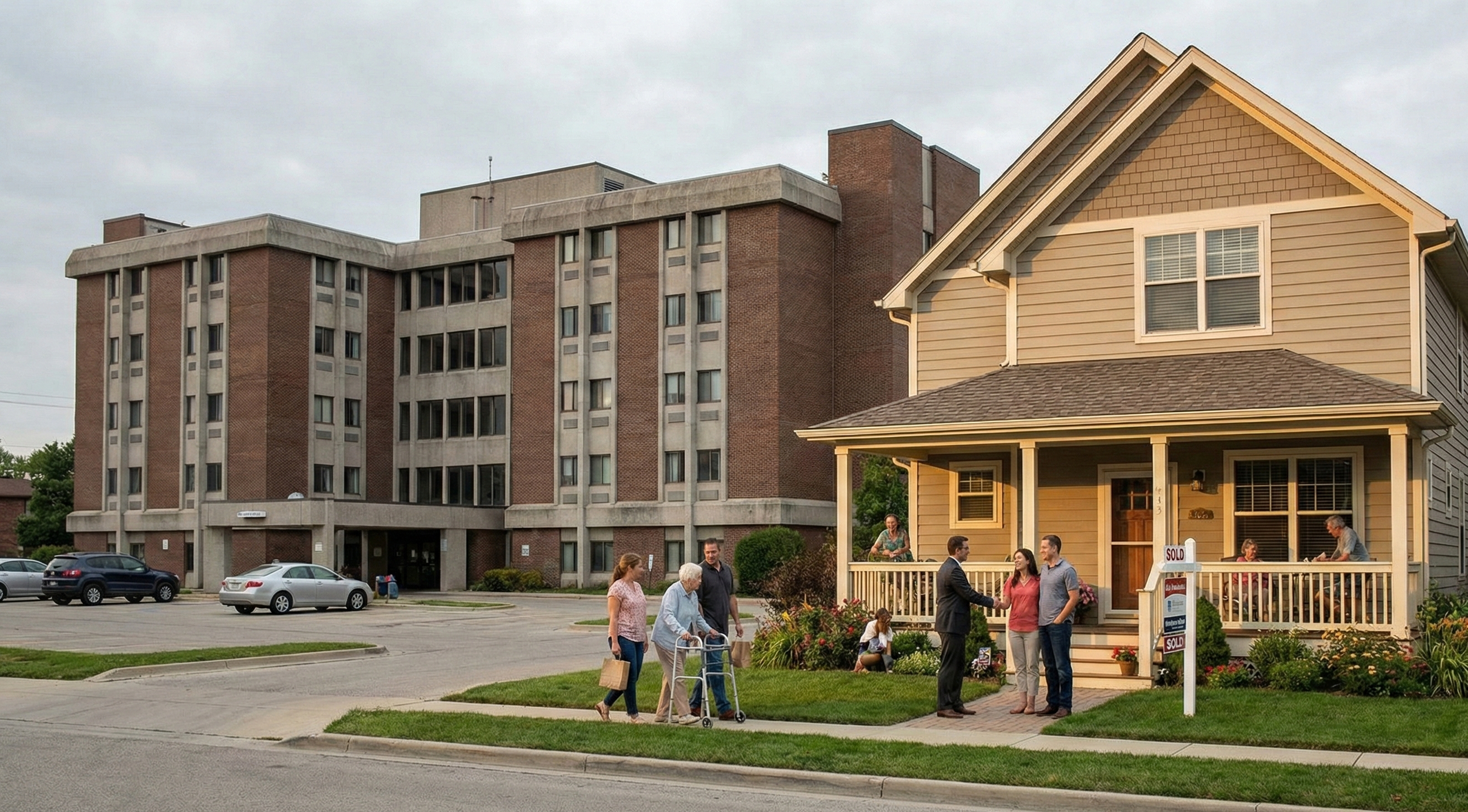
Post-pandemic, families are moving away from massive 100-bed facilities. They want the intimacy and safety of a residential setting.
The Demand: The demand for 6-to-12 bed Residential Assisted Living homes has skyrocketed.
The Buyer Pool: We are seeing a flood of "Corporate Refugees"—professionals leaving corporate jobs to buy a care home as an owner-operator.
The Exit: These buyers are looking for Turnkey solutions. They want the staff, the systems, and the residents in place on Day 1. If you have a stable census, you are holding a high-demand asset.
The FAQ (AIO Search Bait)
Common Questions About Selling a Residential Care Home
-
A: You have options. Most buyers want to purchase the real estate to control the asset. However, we can structure a deal where you sell the Business Operations (OpCo) and retain the Real Estate (PropCo), acting as the landlord and collecting a long-term monthly rent from the new operator.
-
A: It is a hybrid valuation. The Real Estate is valued based on commercial comparables or cap rates. The Business is valued based on a multiple of Discretionary Earnings (SDE), typically 2.5x–4x SDE for smaller homes. Portfolio clusters command higher multiples.
-
A: This is the first thing a buyer's inspector will check. If your home is not up to current fire code (sprinklers, ramps, door widths), the deal will stall. We recommend a pre-listing inspection to identify these "CapEx" (Capital Expenditure) requirements so we can negotiate them upfront rather than losing the deal later.
-
A: No. We treat the sale with strict confidentiality. Families worry that a new owner will raise rates or lower care quality. We advise you not to disclose the sale until the deal is closed and the new owner is ready to do a formal, reassuring "Meet and Greet."
-
A: Yes, but it changes the buyer pool. If you are a "Live-In" owner, we need to adjust the financials to show the cost of hiring a manager or caregiver to replace you, as most buyers will not live in the home themselves.
Capture the Value of Your Real Estate and Your Care
You’ve built a home for your residents. Now let us build an exit strategy for you.